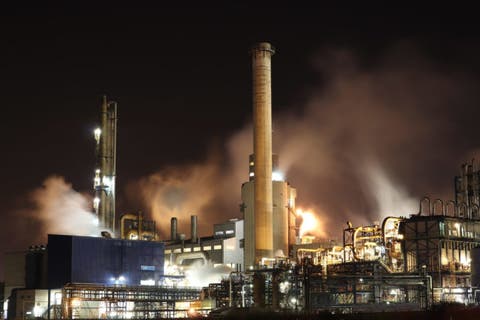
born at 321.89 PPM CO2

Credit is due to René Magritte, Man Ray, Salvador Dalí and Leonora Carrington, whose extraordinary work has inspired many of the images featured throughout this blog.

Monday, 10 January 2022

(XIN) THREE GORGES GENERATES 103.6 BILLION KWA IN 2021


Aerial photo taken on Sept. 10, 2021 shows the scenery of the Three Gorges Reservoir in Zigui County of Yichang City, central China's Hubei Province. (Photo by Zheng Jiayu/Xinhua)

WUHAN, Jan. 8 (Xinhua) -- The Three Gorges Hydroelectric Power Station on China's Yangtze River has generated 103.6 billion kWh of electricity in 2021, according to the China Three Gorges Corporation.

The clean energy it produced is estimated to be equivalent to the electricity generated by 31.8 million tonnes of standard coal, respectively reducing carbon dioxide and sulfur dioxide emissions by 86.9 million tonnes and 19,400 tonnes, said Chen Hui, head of the Three Gorges hydroelectric plant.

In 2020, the hydropower station had generated 111.8 billion kWh of electricity, beating the previous world record for hydropower generation of 103.098 billion kWh set by Brazil's Itaipu hydroelectric plant in 2016.

With 34 hydropower generating units, the hydropower station has a generating capacity of 22.5 million kilowatts. Xinhuanet.com - link - huaxia - link - more like this (China) - link - more like this - link

(LET) VEOLIA PLANS FOR EV BATTERY RECYCLING IN UK


An estimated 350,000 tonnes of waste electric vehicle batteries are set to be on the market by 2043

Veolia has today (10 January) unveiled plans to build an electric vehicle battery recycling plant in the West Midlands.

The proposed site in Minworth will be able to process 20% of the UK’s end of life vehicle batteries by 2024, Veolia claims.

According to the waste management company, the plant will “mark the first step in developing recycling technology and treatment capacity in the UK” for electric vehicle batteries.

The plant will initially discharge and dismantle batteries, Veolia explained, before the “mechanical and chemical separation recycling processes” will be completed.

Veolia will also “utilise its global network to establish a full circular economy solution in the next five years to produce battery precursors in Europe”.

Veolia already operates in the Minworth area, through a waste transfer station on the Minworth Industrial Estate, Sutton Coalfield. letsrecycle.com - link - Joshua Doherty - link - more like this - link

(OFF) POWERX SIGNS LOI WITH DNV

Tokyo-based PowerX, Inc. has entered into a non-binding letter of intent (LOI) with DNV to collaborate on the technical assessment of the Power Transfer Vessel (Power ARK) and its battery system, as well as the potential development of a new class notation for Power ARK’s global implementation.

Through this collaboration, PowerX and DNV will chart new opportunities in the renewable energy sector, as the Power ARK redefines established conventions for both the maritime and onshore power utility industries, PowerX said.

The LOI will see DNV and PowerX collaborate on the assessment of the Power ARK concept and identifying key standards or class notations relevant to the project; defining relevant standards to apply for safety validation and statutory certification and advising on alternative design approaches where statutory regulations are missing, inadequate, or are not fully relevant/applicable today; establishing certification methodology for the battery systems used onboard; system design and optimization strategies to simulate and protect battery safety, performance, etc.; and the development and implementation of a new standard/class notation relating to essential safety and performance parameters necessary to the Power ARK concept. offshoreWIND.biz - link - Adnan Durakovic - link - more like this - link

Sunday, 9 January 2022

(EXT) SONY ENTERS THE EV ARENA

A new player has entered the electric vehicle arena, and it isn’t a mainstream car manufacturer. Sony, whose name normally brings to mind hard-to-find gaming consoles and other in-home gadgets, is well on its way to releasing its first electric SUV to the public.

Sony brought its sleek proof-of-concept to the CES 2022 stage this week. The SUV, referred to as Vision-S 02, is an all-electric seven-seater made to integrate with “a large variety of lifestyles.” Sony says the prototype is currently being tested on public roads.

The tech giant had actually shown off a concept EV (Vision-S 01) at CES two years prior, but the prototype remained just that: a proof of Sony’s EV prowess that never actually made it into anyone’s home garage. Instead, Sony took the EV/cloud computing platform it had made for the Vision-S 01 and developed the new SUV around it, allowing the company to explore a larger cabin area without sacrificing its in-vehicle entertainment options.

Much like its predecessor, the Vision-S 02 is covered in CMOS image and LIDAR sensors meant to sense three-dimensional space. This is vital to the EV’s driver assistance system, which isn’t quite Tesla’s autopilot (this may be a good thing) but enhances the driver’s ability to judge their outside environment and accommodate oncoming emergency vehicles. 

Not only does the system interact directly with the driver, but it interfaces with the EV’s sound and human-machine interface (HMI) systems, allowing the driver to hear external signals when they arise. ExtremeTech- link - Adrianna Nine - link - more like this - link

Friday, 7 January 2022

(CLE) US - RENEWABLES OUTPERFORMING GAS

As coal plants shut down across the United States, there is a pervasive belief that gas is the necessary “bridge” to a low-carbon grid. 

As of late 2021, utilities and other investors are anticipating investing more than $50 billion in new gas power plants over the next decade. But, in reality, we no longer need these gas plants to tide us over until renewables are ready or affordable. Renewables are here now, and are often cheaper than gas.

In fact, clean energy portfolios — combinations of renewable energy, efficiency, demand response, and battery storage — are increasingly economical compared with new gas plants. A recent RMI report found that clean energy portfolios are a cheaper option than more than 80 percent of gas plants proposed to enter service by 2030. 

At least 70 GW of proposed gas plants could be economically avoided with cleaner alternatives, saving $22 billion and 873 million metric tons of CO2 over project lifetimes. This is the equivalent of taking more than 9 million vehicles off the road each year.

Already, more than half of gas plants proposed to come online in the past two years have been canceled before construction began.

For example, in New Mexico, the Public Service Company (PNM) is planning to retire the coal-powered San Juan Generating Station in 2022. To replace capacity, PNM proposed a 280 MW gas plant, the Piñon Energy Center, along with solar and storage projects. However, stakeholders pushed back on the plan, and in July 2020, the commission approved an alternate 100 percent renewable and storage replacement for San Juan based on costs, economic development, and New Mexico energy law.

And in Maryland, the Mattawoman Generating Station — a 990 MW gas plant — was approved in 2015 in a majority-Black community of Prince George’s County. However, due to economics (clean energy portfolios became cheaper than the proposed gas plant in 2018), a federal civil rights complaint, and pipeline cancellations, the project was declared no longer feasible, and was canceled in January 2021. CleanTechnica - link - Laurie Stone - link - more like this (USA) - link - more like this - link

Thursday, 6 January 2022

(PEI) IBERDROLA STRENGTHENS SIEMENS PARTNERSHIP

Spanish multinational utility Iberdrola has signed contracts with Siemens Gamesa for the maintenance of turbines across 69 wind energy farms in Spain and Portugal.

The contracts will see Siemens Gamesa maintaining Iberdrola’s 1,963 wind turbines with a total capacity of 1,928MW.

Siemens Gamesa will maintain the G4X (660 kW unit power), G5X (850 kW), G8/9X (2.0 MW), Siemens Gamesa 2.X (SG 2.1-114 and SG 2.6-114) and Siemens Gamesa 3.X (SG 3.4-132) turbines for a period of between three to five years.

In addition to the maintenance services, Siemens Gamesa will also help Iberdrola to improve energy production and reduce operation costs at the sites.

The contracts also see Iberdrola leveraging Siemens Gamesa’s services to modernise the fleet for safety and output improvements, according to the statement. The contract is expected to increase the life span of the wind turbines.

Some 160 wind farm technicians will be employed to carry out the work, thereby improving the local rural economies in which the turbines are located. Power Engineering International - link - Nicholas Nhede - link - more like this (Spain) - link - more like this - link

(GUA) EV 11.6% OF TOTAL 2021 UK CAR SALES


A new electric vehicle charging station in Slough. Photograph: Maureen McLean/REX/Shutterstock

Booming electric car sales were a bright spot in a tough car market last year amid disruption to global supply chains hitting manufacturers, according to fresh data.

In its annual sales snapshot for 2021, the Society of Motor Manufacturers and Traders (SMMT) said carmakers sold 190,000 battery electric cars across the country last year, accounting for about 11.6% of total sales.

Reflecting growing appetite for greener vehicles, sales rose from 108,000 in 2020, when battery-powered cars accounted for just 6.6% of new cars bought in Britain. In December 2021 alone, electric cars made up 26% of sales, a record for a single month when physical dealerships were allowed to open during the Covid pandemic.

Against a backdrop of global supply chain disruption and shortages of crucial semiconductor chips, overall UK car industry sales for the year were up just 1% from 2020 levels to 1.65m, and remained almost a third below total sales in 2019.

However, sales of battery electric vehicles were a bright spot for the industry, the SMMT said, as Britons bought more electric cars in 2021 than in the previous five years combined.

Mike Hawes, the SMMT’s chief executive, said thelack of microchips used in everything from windscreen wipers to in-car entertainment systems would continue to serve as a drag on the car industry during 2022. The Guardian - link - Jasper Jolly - link - more like this - link

Wednesday, 5 January 2022

(TIP) BRITISH LITHIUM - A WORLD FIRST


British Lithium says its Cornish operations could eventually meet one-third of the UK’s lithium demand (Photo: Martin Meissner/AP)

A mining company based in Cornwall claims to be the first in the world to have extracted battery-grade lithium carbonate from shards of mica crystals.

British Lithium said on Tuesday its pilot plant in Roche, North Cornwall, has successfully extracted lithium carbonate from the mica in the county’s granite bedrock.

It paves the way for Cornwall to become a hub for mining and refining lithium, the main ingredient for electric car batteries.

The Government plans to end the sale of petrol and diesel cars in the UK by 2030, with electric vehicles widely expected to make up the vast majority of new car sales from then.

Producing lithium in the UK would help to build a domestic supply chain for electric vehicle batteries, supporters argue.

British Lithium chief executive Andrew Smith said he was “delighted” by the results from the pilot plant, particularly as it operates under “real world” conditions, using local water supplies and materials.

The plant, which was funded by the UK Government, will shortly start producing 5kgs of lithium carbonate each day for customers to trial.

“We’re delighted with the rapid progress we’ve made, but there’s still a long road ahead in terms of refining and optimising the process,” Mr Smith said.

Plans are underway at British Lithium to build a full-scale plant, with the aim of producing 21,000 tonnes of battery-grade lithium carbonate each year. That represents around one-third of the total lithium supply the UK is expected to need to meet future electric vehicle demand. The I Paper - link - Madeleine Cuff - link - more like this - link

(SEI) RWE & AUDI PIONEERING SECOND LIFE EV BATTERY USE


Image: RWE

German energy company RWE is piloting a 4.5MWh second life EV battery storage system alongside pumped storage.

The system is comprised of 60 lithium-ion batteries from Audi’s e-tron vehicle development programme and is being tested in providing temporary storage at the pumped hydro plant at the Hengsteysee reservoir, one of the two main reservoirs at Herdecke near Dortmund in west Germany.

The batteries at the end of life in vehicles have a residual capacity of typically more than 80%, opening the way for their use in stationary electricity storage systems. Depending on how they are used, they could still have a remaining service life of up to ten years.

“Powerful battery systems are essential for the energy transition. In Herdecke we are working with Audi to test ways to use decommissioned high voltage batteries from EVs by connecting them together to form stationary storage systems,” explains Roger Miesen, CEO of RWE Generation.

”Putting such second life batteries to further use is a sustainable alternative to factory new batteries. The experience from this project will help us identify the applications for which we can use battery systems of this nature most cost effectively.”

As the batteries weigh about 700kg each, RWE has built a 160m2 hall for the full system, with installation starting in October 2021 and commissioning in November.

RWE expects to begin marketing the storage capacity of the system early in 2022, initially to help maintain the frequency in the electricity grid. The plan is then to test other marketing methods on a flexible basis.

RWE intends to draw on the insights gained from the Herdecke storage system to build and operate larger storage systems based on EV batteries in the future. This will involve an innovative system in which pairs of modules are connected in series, thus boosting the operating voltage and reducing costs. Smart Energy International - link - Jonathan Spencer Jones - link - RWE - link - more like this - link

(CLE) FFI ELECTROLYSERS

There are several dominoes that have to stack up to make green hydrogen work. One is cheap energy and the other is cheap electrolysers. Australia has abundant sunshine to provide the energy. 

Now, Fortescue Future Industries (FFI) is working on the next piece of the puzzle, electrolysers, making hydrogen using an electrolyser designed and built by the FFI team. They succeeded in this 10 days ago, producing industrial-grade hydrogen for the first time in their Western Australia facility.

“FFI has developed a number of new electrolyser technologies that will form part of their electrolyser patent family. The outcomes of these projects will inform FFI’s electrolyser technology selection going forward, as FFI works towards its target to produce 15 million tonnes of green hydrogen per year by 2030. FFI Chief Executive Officer Julie Shuttleworth said, ‘This is another outstanding achievement from our FFI in-house scientists and engineers — who are continuing to break new ground. The FFI team has designed and operated our own electrolyser system which will be the key to developing FFI’s green hydrogen production into the future."

“This electrolyser was internally designed, built and commissioned by a small, dedicated team of experts — an impressive achievement that is representative of the hard work that is happening across the whole of FFI,” FFI Chairman Dr Andrew Forrest AO said. “The team spent thousands of hours on this project, facing setbacks along the way, but they pushed forward and managed to produce hydrogen before their stretch target date — something they should be incredibly proud of.”

The electrolyser will be producing green hydrogen by the end of 2022 powered by solar panels installed on the roof of FFI’s Dawson Road facility near the Perth Airport, Western Australia. “The stack that produced the hydrogen is a pressurised alkaline system. The internally designed supporting hydrogen gas management system is fully operational and will be used to test all of FFI’s prototypes and designs.” CleanTechnica - link - David Waterworth - link - more like this - link - more like this (Australia) - link

Tuesday, 4 January 2022

(VER) THE VISION - 648 MILES - ON A SINGLE CHARGE

Mercedes-Benz is the latest automaker to make a grab for the title of the longest-range electric vehicle with the reveal of the Vision EQXX, a solar-powered concept car capable of exceeding 1,000 kilometers (648 miles) on a single charge.

That’s enough to get the Vision EQXX from New York City to Cincinnati, or Berlin to Paris, or Bejing to Nanjing, on a single charge. And it’s impressive in contrast to other long-range EVs currently on the road today, like the Lucid Air (520 miles) and Tesla Model S Long Range Plus (402 miles).

But unlike those vehicles, the Vision EQXX is just a concept with no concrete production plans. (For now.)

Mercedes, which has been teasing the vehicle for several weeks, finally unveiled it (virtually) at the Consumer Electronics Show in Las Vegas. (Like most of the major companies, Mercedes canceled its plans to attend CES in person amid a rise in COVID-19 cases.)

With its sporty intentions and sleek, futuristic design, the Vision EQXX will likely serve as the basis for a production car that could end up rivaling other luxury EVs like the Porsche Taycan, Audi E-tron GT, and Tesla Roadster. The Verge - link - Andrew J. Hawkins - link - more like this - link

(WAS) BEHOLD - SOLAR SHINGLES


A roof with solar shingles from GAF Energy. (GAF Energy)

Thousands of Americans install solar energy systems on their roofs each year. Most commonly, that means solar panels mounted on racks, but another option may become more accessible: solar shingles.

Starting Monday, one of the largest roofing companies in the United States will be selling a new solar shingle product. The aim is to drive the cost of installation down and the rate of solar adoption up.

“What we’ve done is we’ve created a shingle that has solar properties,” said Martin DeBono, president of GAF Energy, which is a sibling company of GAF, a roofing manufacturer with a network of more than 10,000 contractors across the country. “While someone is getting a new roof, we can offer them a solar roof.”

The Timberline Solar shingles are a bit bigger and about twice as heavy as traditional shingles, but look remarkably similar.

The top half is nailed to the roof, while the bottom half overlaps the previous solar shingle and remains exposed. The outward-facing section of a solar shingle is made of photovoltaic cells, rather than asphalt. The panels collect energy and then transfer it through wires on the end of each shingle that daisy-chain together.

The goal is to lower the cost of rooftop solar by combining roofing and solar installation, said DeBono, who uses his own home as an example. His traditional roof, he said, cost around $28,000, and the solar panels he installed would be around $24,000, for a total price tag of around $52,000, or about $44,000 after rebates and incentives — which can include tax credits. In comparison, he estimated a GAF Energy solar roof would cost approximately $42,000 and drop to around $30,000 after incentives, saving about $14,000.

The shingles from GAF Energy, whose parent company is Standard Industries, come with a 25-year warranty, which the company said should be enough time for a customer to recoup the cost of the system through reduced utility bills — especially in states where electricity is more expensive. It’s a proposition that the company hopes will make its product more successful than previous attempts.

Solar shingles have been around in some form for decades, said Zachary Holman, a professor of engineering at Arizona State University who specializes in solar technology. “Many people have played in this space,” he said, including Tesla and other roofing companies such as CertainTeed. Another company, Maxeon Solar Technologies, is aiming to make adhesive solar panels. The Washington Post - link - Tik Root - link - more like this - link

(WMW) ADBA ASKS UK GOV FOR MORE SUPPORT

The potential of the biogas industry to significantly reduce greenhouse gas emissions in the UK has been overlooked by British leadership, according to the Anaerobic Digestion and Bioresources Association (ADBA).

The trade body has called on the government to provide viable policy support to the industry via implementation of anaerobic digestion (AD) infrastructure.

AD refers to the decomposition of organic waste in the absence of oxygen via micro-organisms. The process generates biogas (a mixture of methane and carbon dioxide) and digestate.


The refined biogas-now forming biomethane-can be used to fuel buses, refuse collection lorries and HGV’s, being a more energy efficient fuel solution. Meanwhile, the digestate can be used as bio-fertiliser, being rich in nutrients such as nitrogen and potassium which are essential for healthy plant growth and fertile soil.

With the UK set to host the UN Climate Change Conference of the Parties (COP 26), a summit that aims to limit global warming to below 2°C, individual governmental commitment to climate action is particularly important.

According to ADBA estimates, a proper policy framework enabling the use of AD could serve to reduce UK greenhouse gas emissions by 6% by 2030.

So far, governmental inability to establish a platform for the green technology has led to the diversion of 170 million tonnes of organic waste to landfill and incineration. Waste Management World - link - WMW muck rack - link - more like this - link

Monday, 3 January 2022

(AUC) H2 ABERDEEN PROJECT ADDS EAV BIKES

A hydrogen-fuel cell electric cargo bike trial is being launched in Aberdeen.

The bikes are made by Oxfordshire based manufacturer Electric Assisted Vehicles (EAV), who are building six eCargo bikes for the project, which is set to start in 2022.

The trial has been set up to help gather new insight in the use of hydrogen fuel cell vehicles for last-mile deliveries.

EAV says it has developed its bikes because it has concerns over the weight of battery-powered vehicles, as well as the true environmental impact of them.

“It’s a simple fact that the raw materials for battery production are in short supply.” said Adam Barmby, CEO and founder of EAV.

“EAV focuses on weight reduction, so we use less energy and therefore require less batteries.”

The EVAH2Cubed eCargo bike that will be used in the trial incorporates the fuel cell in its powertrain, using the electricity generated to charge a small number of batteries. The only emission as a result of the hydrogen being created is water.

“The Transport Secretary, Grant Shapps, recently delivered a speech at the Dubai Expo 2020 stating that the UK will be taking a global lead in developing hydrogen-powered transport.” said Nigel Gordon-Stewart, executive chairman of EAV.

“Nowhere is the use of hydrogen fuel cells in lightweight vehicles more effective than within the urban environment.” Autocar - link - more like this (Scotland) - link - more like this - link - more like this (last mile ev) - link

Sunday, 2 January 2022

(OFF) HORNSEA TWO ON SCHEDULE

DEME Offshore’s jack-up Sea Installer has left the Port of Hull loaded with the last batch of turbine components to be installed at the 1.32 GW Hornsea Two – soon to be the world’s largest offshore wind farm in operation.

Sea Installer and Sea Challenger have been transporting the wind farm’s 165 Siemens Gamesa 8.4 MW turbines from Siemens Gamesa’s facilities in Hull and installing them at the site some 89 kilometres north-east of Grimsby, the UK, since May.

Sea Installer is expected to reach the installation site at around 3 pm UTC, Friday, 31 December. Sea Challenger is currently at the installation site.

Seeing that these will be the final runs for both vessels on the project, it is safe to assume that Hornsea Two has already claimed the top spot in terms of the installed capacity from its sister project – the 1.2 GW Hornsea One.

Hornsea Two is being developed by Ørsted and is scheduled to be fully commissioned in the first half of 2022.

The wind farm delivered first power to the UK grid earlier this month. offshoreWIND.biz- link - Adnan Durakovic - link - more like this - link