born at 321.89 PPM CO2

Credit is due to René Magritte, Man Ray, Salvador Dalí and Leonora Carrington, whose extraordinary work has inspired many of the images featured throughout this blog.

Sunday, 29 September 2024

(NAT) COMING TO A BORDER NEAR YOU

The fastest any human has ever run on record was Usain Bolt. He was clocked at a ridiculously quick 27.79 mph (44.72 km/h) when he ran a 9.58-second 100-meter dash. Two-legged robots can run even faster, and it looks really weird.

What sent me down this rabbit hole was stumbling on a 10-year-old video of a robot designed after a Velociraptor dinosaur by the Korea Advanced Institute of Science and Technology (KAIST). Basically the Korean version of the Massachusetts Institute of Technology (MIT).

The aptly named KAIST Raptor robot weighs 6.6 lb (3 kg) and sprints at an insane 28.5 mph (46 km/h). It has a "tail" to aid its balance while it runs at full tilt, even while obstacles are thrown in its path. Sadly, its "tail" looks nothing like a 'raptor tail. It's actually just a pole mounted to the side that works as a counterweight to keep it upright.

Given the tether, we can't quite tell if it's self-balancing as the researchers claim, so it almost feels like a bit of a cheat on the top speed. Could it run that quickly and stay upright without the crane-like tether?

The only robot to have run nearly as fast as the Raptor is Boston Dynamics' Cheetah at 28.3 mph (45.5 km/h) ... but the Cheetah is a 4-legged sprinter – also tethered – so "it doesn't count" in this article. But it's still kind of cool. For reference, an actual cheetah can run up to 70 mph (113 km/h). More of this article (New Atlas) - link - more like this (robots) - link

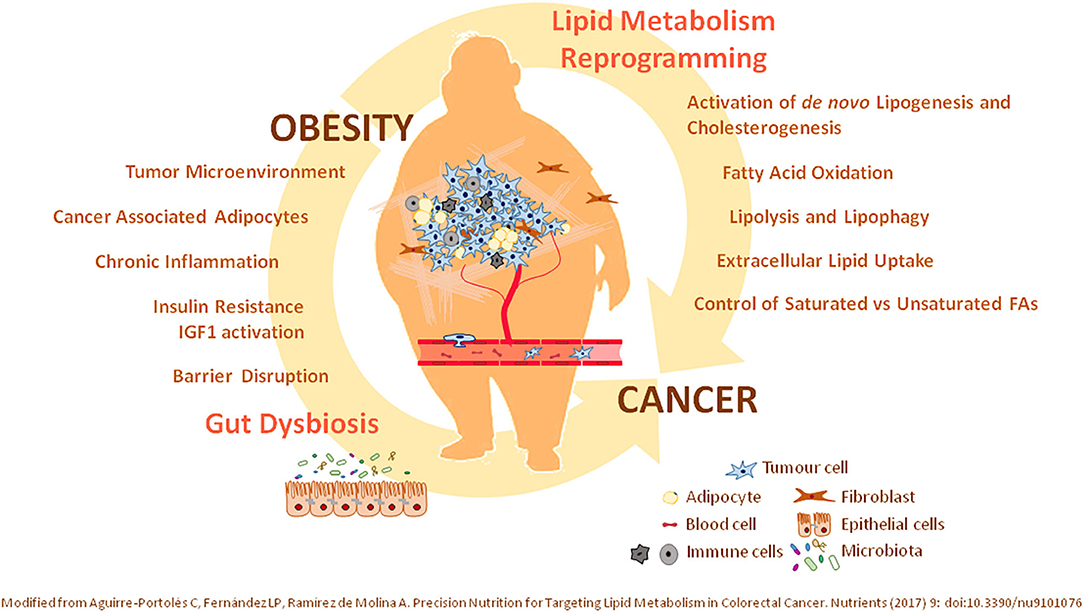
(SCI) RED MEAT - A GOOD DIET FOR CANCER

A new Cleveland Clinic study has identified diet-derived molecules called metabolites as main drivers of young-onset colorectal cancer risk, especially those associated with red and processed meat. 

The NPJ Precision Oncologyreport, which analyzed metabolite and microbiome datasets, highlighted that one of the best ways a younger (<60 years) adult can prevent colorectal cancer is to discuss their diet with their doctor.

Increased monitoring and screening for colorectal cancer is an extremely helpful tool. Despite the success of these methods, these data indicate physicians can take a different approach with their younger patients, says senior author and gastrointestinal oncologist Suneel Kamath, MD.

"At the end of the day, it's impractical to apply our care models for those over 60 to younger adults simply because we cannot give everyone in the system yearly colonoscopies," he explains. "What is much more feasible is to give everyone in the system a simple test to measure a biomarker that determines their colorectal cancer risk. Then we can give the most at-risk individuals appropriate screening." More of this article (Science Daily) - link - diagram - link - more like this (causing cancer) - link

Thursday, 26 September 2024

(WEV) RENAULT ESTAFETTE

Renault has revealed the Estafette Concept, a new electric utility van designed specifically for urban environments. The Estafette marks Renault’s latest step in reimagining last-mile delivery vehicles, combining compactness, agility, and spaciousness with cutting-edge technology to meet the evolving demands of e-commerce and urban logistics.

The Estafette Concept is part of Renault’s broader vision for electric utility vehicles, developed in partnership with Volvo Group and CMA CGM Group through the joint venture Flexis. Designed with the needs of professional drivers in mind, the van aims to improve operational efficiency, reduce costs, and enhance safety for delivery drivers in increasingly congested cities.

The Estafette Concept was created to address the growing challenges faced by delivery professionals, tradespeople, and retailers, especially in cities with tightening traffic restrictions. As e-commerce continues to drive exponential growth in freight transport, conventional vans are proving inadequate for the demands of urban deliveries. Renault's response is an all-electric van that combines the compactness of its Kangoo L2 model, the agility of the Clio, and the cargo capacity of the Trafic L1H2. This unique blend is intended to deliver both efficiency and practicality for urban drivers who require manoeuvrability and ample cargo space.

Renault's design philosophy for the Estafette Concept was informed by extensive feedback from professional drivers. The van's architecture is aimed at streamlining operations while maintaining high standards of safety for both drivers and their cargo. The Estafette is fully connected, utilising Renault’s Software-Defined Vehicle (SDV) architecture through the FlexEVan platform developed by Ampere. This system is designed to enable real-time updates, predictive maintenance, and overall cost savings of up to 30% compared to traditional vans. More of this article (WhichEV) - link - more like this (ev vans) - link - more like this (Renault) - link

Saturday, 21 September 2024

(GRI) MICROPLASTICS

Twenty years ago, a team of U.K. scientists sounded the alarm on a then-underappreciated problem: the breakdown of plastic litter into small, even microscopic, fragments. While many previous reports had documented the buildup of plastic bottles and bags in the natural environment, much less attention had been paid to what the scientists dubbed “microplastics.”

Due to “the rapid increase in plastic production, the longevity of plastic, and the disposable nature of plastic items,” the researchers concluded that there was “considerable potential” for microplastic pollution to become a major problem for the environment and human health.

It turns out, they were right.

Over the past two decades, the rate of plastic production has roughly doubled, to more than 400 million metric tons per year, about the weight of 1,200 Empire State Buildings. In the same time period, microplastics — defined as particles with a diameter less than 5 micrometers, about the width of a human hair — have exploded into the public consciousness, riding on a wave of research into the particles’ prevalence across ecosystems and in humans’ bodies. Since that 2004 paper, one of the first to use the term “microplastics,” microscopic plastic fragments have been found everywhere from deep sea sediments to the top of Mount Everest, as well as in human blood, breast milk, colons, kidneys, livers, lungs, placentas, and other body parts.

Many of these findings are synthesized in a review paper published this week in the journal Science. The paper considers what we’ve learned from thousands of research articles about microplastics — including where they come from, where they end up, and how they affect organisms — and appraises regulatory options for dealing with the problem.

Research on the topic has “kind of taken off,” said Richard Thompson, a professor of marine biology at the University of Plymouth in the U.K. who was lead author on the paper from 20 years ago and the new one published on Thursday. “It’s now pretty clear that this stuff is everywhere,” he added, and that unless something changes, humanity will eventually reach a point of “wide-scale” and “irreversible” harm to the environment.

One thing that has become much clearer since the early 2000s is the sheer extent of microplastic pollution. While Thompson’s 2004 paper documented small fragments of acrylic, nylon, and polyester in coastal environments around the U.K., further investigation has shown that contamination is global. By now, microplastics have been found in virtually every ecosystem researchers have looked, including in soils, lakes, and rivers, and on remote mountains. One alarming study from 2020 found that microplastics are present in rainwater, while others have shown that the particles are ubiquitous in the indoor air we breathe. Earlier this year, the environmental consulting firm Earth Action estimated that nearly 13 million metric tons of microplastic enter the oceans and terrestrial environment annually. More of this article (grist.org) - link - more like this (microplastics) - link - more like this (pollution) - link - more like this (microplastics) - link

(EUN) RICHEST 1% OUTPOLLUTES POOREST 66%

The carbon emissions of the world's richest 1 per cent are thought to be the same as poorest two thirds of humanity.

Demands for climate policies targeting the polluting activities of the super-rich are rapidly gaining traction.

Several countries have so far proposed billionaire taxes to raise funds for, among other things, tackling climate change. Earlier this year finance leaders from G20 countries agreed on a wealth tax on the world’s super-rich.

It could raise around €230 billion to tackle causes like climate change and poverty.

Disagreements have been bubbling away under the surface about whether the plan is viable, who would oversee the process, and how to actually introduce a tax on the super-rich.

How high are emissions from the world’s richest people?

New research has shown that the general population finds it hard to estimate exactly how wealth changes people’s carbon footprint. And that could affect their support for climate policies that would tax the highly polluting activities of the super-rich.

So just how vast is the difference in emissions?

An analysis by Oxfam and researchers in the US from November last year looked at the luxury purchases and financial investments of 12 billionaires. It found that they account for almost 17 million tonnes of greenhouse gases each year - the same as 2.1 million average homes or 4.6 coal-fired power plants annually.

Previous research has also shown that the wealthiest 1 per cent of people contribute more emissions than two-thirds of all humanity.

And flying by private jet, according to a study from last year by Green Alliance, releases 10 times more carbon for each passenger than commercial flights. European private jet emissions have soared in recent years, with a 31 per cent increase between 2005 and 2019 - faster than commercial aviation emissions. More of this article (Euro News Green) - link - more like this (private aviation) - link - more like this (wealth) - link

(GRE) THE BLUE PLATE

Early into his new book The Blue Plate: A Food Lover’s Guide to Climate Chaos, ecologist Mark Easter poses a playful, but loaded, question: “How could a morning piece of toast or a plate of dinner pasta be such a world-altering culprit?” This, like many ideas Easter digs into in his illuminating debut, is a glimpse at how the author goes about breaking down the climate toll of the U.S. agricultural system: One dish at a time.

Seafood, salad, bread, chicken, steak, potatoes, and pie are just some of the quintessentially “American” kitchen table staples Easter structures the book around as he tries to help readers understand how greenhouse gases move into and out of soils and plants on land across the country. Each of the nine chapters examines how a single dish is made; from the soil needed to grow the ingredients, to the people who manage the land and the laborers who toil to get it to the table, and the leftovers that remain — documenting the emissions created each step of the way.

The Blue Plate also takes a look at some of the innovative practices being implemented around the U.S. to make such culinary favorites more climate-friendly. Stopping off at an Arizona produce farm, a Wyoming fertilizer plant, a Colorado landfill, an Idaho fish farm, and several dairies, Easter shows how small businesses are making conscientious changes to how they work. He theorizes how each could be applied at scale while quantifying how the widespread adoption of such techniques, and minimal shifts in consumer purchasing and consumption habits, could reduce agriculture’s gargantuan role in warming.

It’s a topic driven by Easter’s own family history. His great-grandmother was a farmer during the Dust Bowl of the 1930s who, along with others growing grain at the time in the Great Plains, unknowingly contributed to the release of one of the greatest known pulses of carbon emissions. The book uses her story to probe how the Great Plains was transformed from one of the planet’s most carbon-rich grasslands into one of its largest agricultural complexes.

By analyzing the emissions released when food is grown, produced, harvested, and shipped, The Blue Plate makes the case that curbing the carbon footprint of what we eat won’t require an agricultural revolution. It’s already happening, in bite-sized cases across the country. More of this article (green queen) - link - more like this (food) - link - more like this (climate) - link

Thursday, 19 September 2024

(NAT) SHINE 2.0 - NOT MUCH DIFFERENT TO SHINE 1.0

Even though we head into nature to get away from it all, we usually haul along our mobile gadgetry. Phones, laptops and handheld consoles all need power of course, which might not be easy to find in the middle of nowhere. That's where the Shine 2.0 comes in.

The 3-in-1 portable wind turbine is designed for "outdoor enthusiasts and emergency preparedness." It folds to about the size of a 1-liter water bottle for between-use transport in a backpack, and weighs in at around 3 lb (1.36 kg). The Shine 2.0 is also weather-sealed to IP54 standards.

The portable turbine sports three 23.6-inch (60-cm) composite-reinforced blades and can be had with a 6-ft-high tower mount accessory (with integrated level). It automatically turns itself into the wind, and is reported capable of generating 50 watts of power when its blades catch a 28-mph wind (45 km/h) – that's reckoned enough to top up a phone in 17 minutes or a laptop in under 2 hours. But if the wind drops to a "slight breeze" of 8 mph, then estimates show that same laptop taking more than 75 hours to recharge. More of this article (New Atlas) - link - more like this (Shine 1.0) - link

Tuesday, 17 September 2024

(GRE) GROWING FOOD, GROWING EMISSIONS

Methane has highly detrimental impacts on the planet, with the food system – particularly livestock – the main emitter of the gas. What can we do about it?

When we talk about greenhouse gas emissions, many of us are really just talking about carbon emissions. And it makes sense – carbon dioxide is responsible for 75% of global warming.

But we often overlook methane (CH4), a gas contributing to a further 20% of warming. Its impact may have been even bigger since the Industrial Revolution, with scientists saying it’s made up 30% of total warming since that period.

However, unlike carbon, the largest source of anthropogenic methane emissions isn’t fossil fuel production – it’s the food system. Agriculture already accounts for a third of all greenhouse gas emissions. Nearly half of these come from carbon dioxide, and 35% are from methane.

Methane emissions are rising faster than ever before, growing by as much as 20% between 2000 and 2020. And if we don’t take any action, human-caused methane emissions will rise by up to 13% between 2020 and 2030, taking the world in the opposite direction on the path to 1.5°C.

So addressing methane is critical to the climate fight. According to the UNEP, anthropogenic methane emissions can be cut by 45% within the decade, which alone would avert almost 0.3°C of temperature rises by 2045.

With the food system’s outsized impact on methane – and vice-versa – it is vital to consider just what we can do to fix the situation, and what solutions companies and governments are looking into. More of this article (green queen) - link - more like this (methane) - link - more like this (animal gas) - link

Sunday, 15 September 2024

(SIM) NUTS COMMISSION POLICY

A mother and son who were meant to fly with Allegiant Air earlier this summer were reportedly removed from the flight because the son was severely allergic to nuts and, as per the complaint filed, a crew member onboard did not want to miss out on the commission they earn on selling nuts in flight.

This resulted in the pair having to make a long drive to an alternative airport to get a flight to their destination the next day.

A complaint has been filed with the United States Department of Transportation (DoT) regarding an incident that occurred in July onboard an Allegiant Air aircraft. According to Business Insider, the complaint was filed by a passenger after she and her son were "wrongfully removed" from the aircraft earlier this year in July.

As per the complaint filed, the passenger's son is allergic to nuts, severe enough to experience anaphylactic shock, which can be fatal, and on informing the crew upon boarding the aircraft, one crew member was reportedly "enraged". More of this article (Simple Flying) - link - more like this (flying bum) - link - more like this (trashing aviation) - link

(TIN) STAYING WARM THIS WINTER


More like this (Tina Ann) - link

Saturday, 14 September 2024

(GRE) ECOACOUSTICS

Think back to the last concert you went to. Now replace the music that rang through the venue with an erratic series of pops, muffled staccatos, distorted taps, and sudden clicks. Not one sound is quite distinguishable from the other, all blending together in a medley of unsynchronized noise.

Except, instead of musicians, what you’re hearing is a mass of underground invertebrates. And they’re putting on an unorthodox show for the handful of humans who know where, and how, to tune in — a complex symphony of vibrations and pulses that relay the state of the very soils these organisms are moving within.

“You can actually use sound to listen to the soil, and get an indication of soil health, based on the little critters moving around,” said Jake Robinson, a microbial ecologist at Flinders University in Australia. He’s the lead author of a study just published in the Journal of Applied Ecology that found that ecoacoustics, or the study of environmental sounds, can not only be used to detect organisms in the soil, but also mined to identify the difference between restored and degraded land.

Although the practice of recording the sounds of nature has existed for over a century, using those recordings to analyze ecosystem health is a newer discipline. Scientists have, in recent years, started experimenting with using ecoacoustic tools to capture the full range of sounds in healthy ecosystems — such as in coral reefs, caves, and oyster beds — and applying those recordings to restoration efforts in damaged and degraded areas.

And yet, soils, and the many hidden species and organisms that subsist underground, haven’t been considered for such techniques. Until now.

“People in the past have thought ecoacoustics probably can’t be used for that, because there’s no vocalization or echolocation. We’ve shown that it actually can be used,” said Robinson. The trick, he noted, is deploying sensitive-enough microphones that allow you to detect the most minuscule of movements. “Things like millipedes, the little tappy legs, you can compare that to a worm, [which has] more of a slidey action. So actually, you can tell slight differences between the acoustic profiles of these little critters.” more of this article (green queen) - link - the secrets you keep - link - more like this (monitoring nature) - link - more like this (soil management) - link

(NAT) LEGO MCLAREN SMASHES 40 MPH

What's the most amount of time you've ever spent putting together a Lego model? A team of 23 lunatics from the Lego group and McLaren Automotive spent over 8,000 hours putting together a full-size working P1 replica – and it actually clocked 40 mph (64 km/h) on a racetrack.

Comprised of a whopping 342,817 Lego Technic pieces, the build is roughly the same size as the actual hypercar from 2013. It even includes 768 Lego motors, in a configuration of eight motor packs to resemble the P1's V8 powertrain. At 2,690 lb (1,220 kg) it's a tad lighter than the original's 3,075 lb (1,395 kg).

With an electric battery and a functional steering wheel, this model was built to be driven for real. British McLaren F1 driver Lando Norris took it for a lap around the UK's Silverstone Circuit, covering 3.66 miles (5.89 km) and hitting a top speed of nearly 40 mph, according to Autocar. More of this article (New Atlas) - link - more like this (Lego) - link

Thursday, 12 September 2024

(JOE) RAT SIZED SPIDERS RELEASED

Thousands of rare spiders the size of rats have been released across the UK by a 15-year long conservation project.

The Fen Raft Spider was on the verge of extinction in the UK just 15 years ago, but now – thanks to the hard work of conservationists – up to 3,750 breeding females have been recorded at 12 sites in Norfolk alone.

Now, estimates suggest that the spider’s population has surged into the thousands with 10,000 breeding females, thanks to the hard work of conservationists at Chester Zoo.

The spider’s numbers had dwindled just over a decade ago due to a lack of wetland habitats, however, the spider that can range from the size of a human’s palm to a rat, has made a staggering return to Britain’s ecosystem.

However, thanks to a remarkable project at Chester Zoo to hand rear thousands of the spiders in individual test tubes to prevent cannibalism and reintroduce them into the wild, they are back. More of this article (JOE) - link - more like this (insects) - link

Wednesday, 11 September 2024

(NAT) MOTORCYCLE SEAT BELTS

Manufacturer applies for seat belt patent for motorbikes to make it easier for paramedics to find motorcyclists involved in high speed head on collisions.

Chinese manufacturer CFMoto thinks motoryclists should buckle up. The company has recently applied for a patent for a seat belt setup that holds riders in their seat under hard braking, or in a frontal crash.

As per the the patent, the motorcycle itself will act as a kind of crumple zone, to cushion the force of frontal impacts against solid objects, such as when a biker runs into the back of a car – an event that's anecdotally becoming more common in the era of automated emergency braking (AEB) systems.

There's no doubt these AEB systems are useful in a four-wheeler, but it's hard to see how they could ever work on motorcycles. A biker needs to be physically prepared and positioned for a hard braking event, even in a straight line, and if the bars are turned at all, hitting the brakes can be a spectacularly bad idea. So when AEB systems pull cars up to an abrupt halt, you sure don't want to be behind them on a motorcycle.

But I digress, back to the seat belt patents. Per CFMoto, the proposed safety belt system will hold the rider on the seat, only allowing them to slide off the bike when the bike falls over, or when it senses a sideways force during a collision. More of this article (New Atlas) - link - more like this (motorbikes) - link

(SDE) FACIAL RECOGNITION BRITAIN

A civil liberties group has said Hampshire police must 'urgently drop' a planned use of facial recognition tech set to help battle crime.

Big Brother Watch hit out as the force said it would use cameras to identify wanted people, track down offenders recalled to jail, find missing people and safeguard children.

For three days Hampshire police will use a van from South Wales Police equipped with a camera and tech that checks faces against a database of images used in the operation.

But Big Brother Watch said Hampshire Constabulary is "trampling over the public’s rights".

A spokesperson said: "Live facial recognition is a dystopian mass surveillance tool more commonly used in countries like Russia and China than in liberal democracies like the UK.

"Hampshire police are trampling over the public’s rights and liberties by using this Orwellian technology.

"This technology completely destroys our privacy and has serious problems with accuracy and bias.

"This year, Big Brother Watch launched legal action against the Metropolitan Police after their live facial recognition surveillance systems mis-identified an innocent member of the public."

"Hampshire police must urgently drop their plans to use this rights-abusive technology."

Southern Co-op has been previously criticised for using facial recognition technology to deter and detect shoplifters. More of this article (Southern Daily Echo) - link - more like this (security) - link